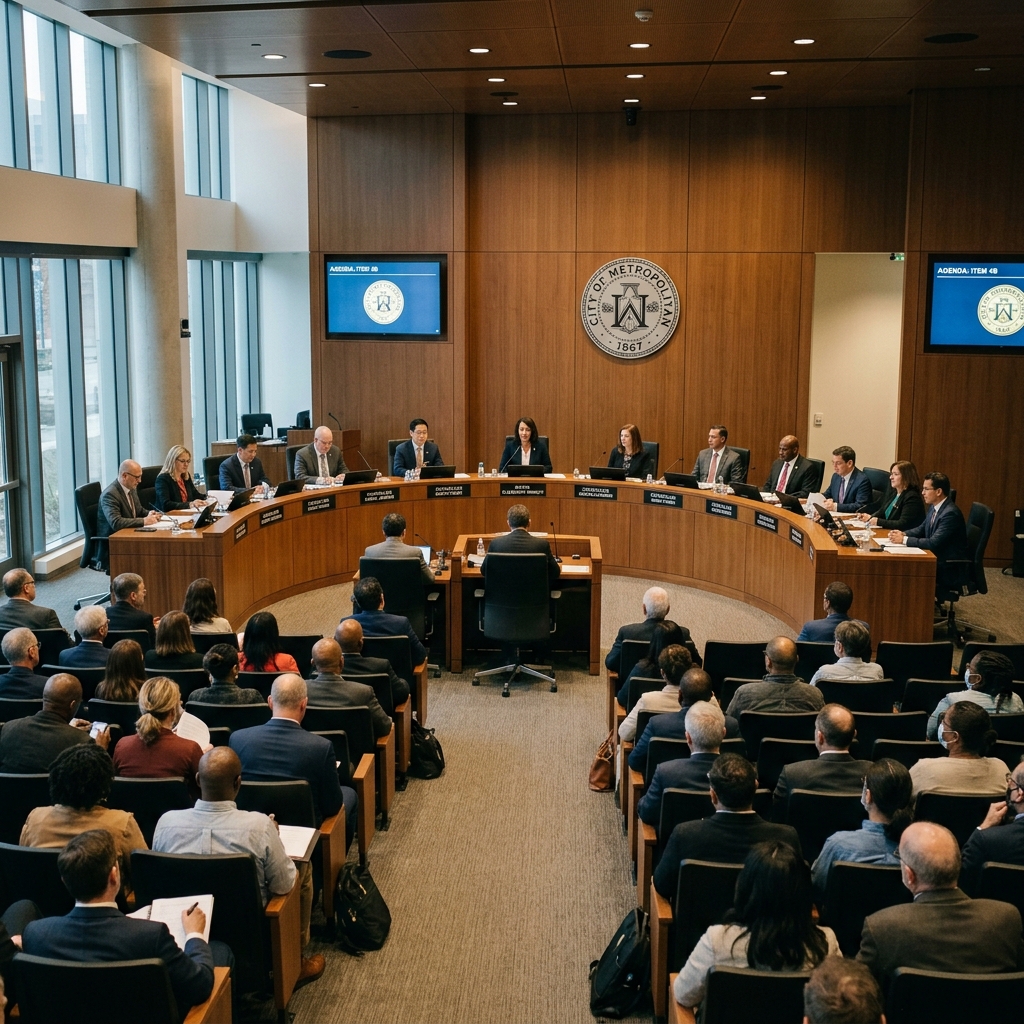

ATLANTA — A governance fight that has simmered through June and July spilled into a sharply worded written exchange at the end of last week, with Mayor Andre Dickens criticizing Fulton County commissioners over tax-allocation-district strategy and jail spending.
WABE’s DorMiya Vance reported July 31 that Dickens sent a four-page letter to commissioners after the Fulton County Board of Commissioners on July 15 passed a resolution opposing extension of six tax allocation districts. Those TADs are central to financing pieces of the city’s Neighborhood Reinvestment Initiative, a multi-billion-dollar framework aimed at westside and southside communities. Atlanta City Council had already accepted the NRI framework and the six TAD extensions in June, with sunsets described as running as late as the end of 2056 depending on the district.
What the letter argued
According to WABE’s account of the letter, Dickens said a majority of the board chose a spur-of-the-moment vote before every commissioner and Fulton taxpayers could fully weigh how the NRI benefits them. The mayor framed county non-participation as a philosophy that values paying for failure over investing in prevention, language WABE quoted from the letter text.
The same letter revisited the county’s roughly $1.3 billion jail-improvement investment approved in April. WABE noted the Fulton jail’s long-running scrutiny, including more than 30 deaths since 2021 cited in linked reporting. Dickens, per WABE, called the $1.3 billion option the wrong answer and an unnecessary heavy drain on taxpayer dollars, arguing it does not break systemic inequity or build the neighborhood conditions that reduce incarceration over time.
City officials had previously offered to sell the Atlanta City Detention Center to the county for $80 million as an alternative path. WABE reported that Dickens withdrew that offer in the letter while still saying he remained willing to work with the county on NRI and TAD issues.
Why commissioners said no
WABE’s story also carried the county side. Commissioner accounts at the July meeting, as reported by WABE, leaned on a Georgia Office of Legislative Counsel opinion holding that extending a TAD is effectively creating a new TAD and therefore requires a redevelopment plan. One commissioner argued the city had locked in a long-term, multi-billion-dollar commitment and was asking the county to consent without binding, enforceable project commitments — language WABE paraphrased from the dais debate and tied to concerns on the order of tens of millions of dollars a year in redirected tax increment.
Commissioner Dana Barrett, speaking to WABE, said more negotiation should have happened district by district so Fulton could protect its own service needs while still helping fund NRI. Barrett told the station that level of bargaining never occurred.
Fulton’s July 17 news release, linked from the WABE piece, branded the board’s posture a taxpayer protection framework. That framing and Dickens’s letter now sit as competing public narratives heading into whatever APS decides.
APS is the remaining swing partner
For the city to advance TAD extensions with a partner in place, WABE explained, at least one of Fulton County or Atlanta Public Schools must opt in. APS had not taken a final position as of the July 31 report. The district’s Tax Allocation District Investment Review Committee was expected to make a recommendation by December after community feedback, WABE reported, even as district materials began listing the new sunset dates associated with the NRI framework.
That timeline matters: without Fulton, the city’s leverage shifts to the school system’s winter decision window. With neither partner, the financing theory behind large pieces of NRI gets harder to execute on the schedule city leaders described last fall when the program’s price tag was discussed in the $5 billion range.
Why metro residents should care
- Housing and transit projects tied to NRI assume incremental property-tax revenue that TADs capture inside designated boundaries.
- County budget pressure around the jail competes with other public-safety and health demands in the same tax base.
- Intergovernmental trust between City Hall and the Fulton board affects every future agreement, from detention capacity to development incentives.
- School-system timing now becomes a critical path item for anyone tracking westside and southside capital plans.
No floor vote scheduled for this morning resolves the split. The durable facts on the record are the July 15 county resolution, the June city legislation, the withdrawn detention-center offer, and the publicly released mayoral letter summarized by WABE.
Sources
- WABE: Atlanta Mayor Andre Dickens criticizes Fulton Commissioners’ opposition to TAD extensions (July 31, 2026)
- Fulton County: Commission declines Atlanta TAD extension, adopts taxpayer protection framework (July 17, 2026)
- WABE follow-up: Fulton commissioner calls mayor’s jail criticism ‘side seat driving’ (July 31, 2026)