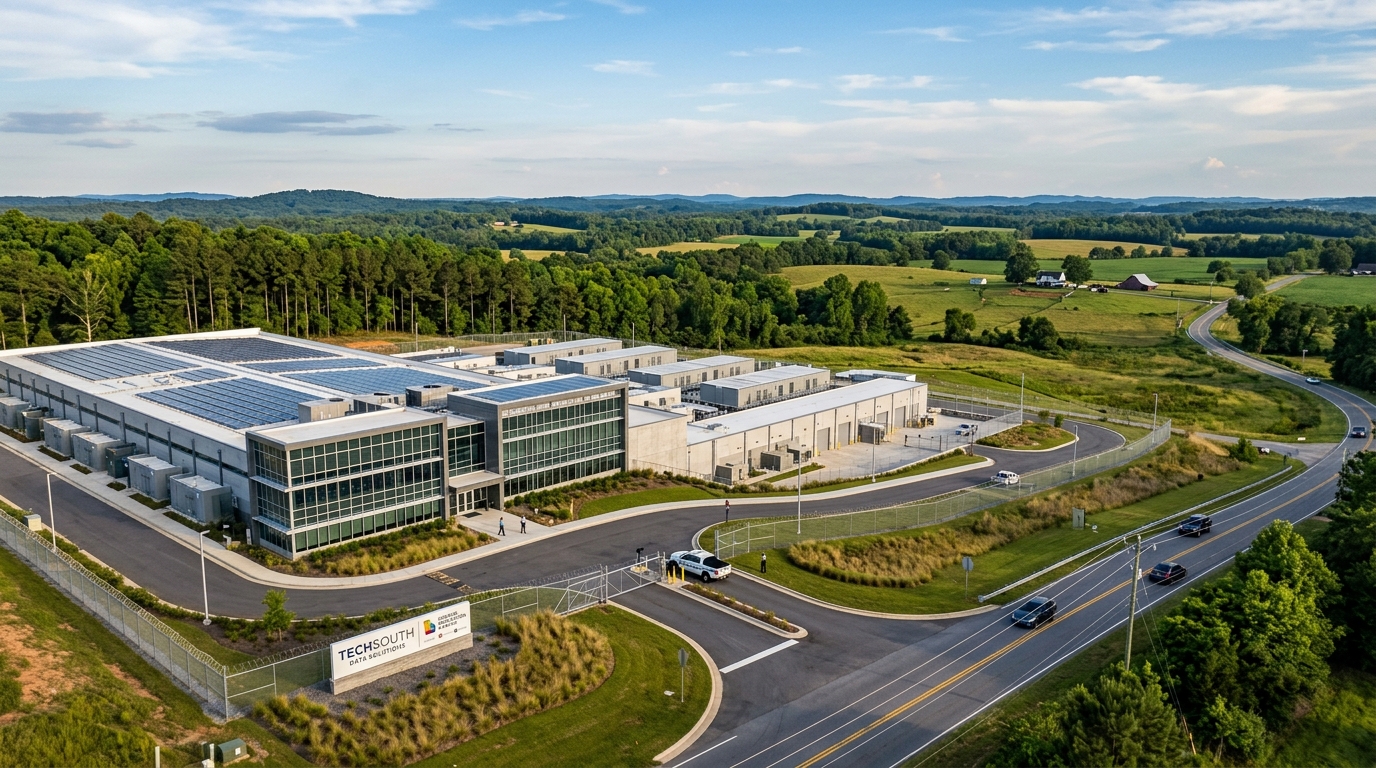

A group of protesters gathered outside the Georgia State Capitol on Saturday, joining a nationwide day of action that called for residents to have a larger role in decisions about rapidly expanding data-center development.
FOX 5 Atlanta reported that 11 protests took place across Georgia as part of more than 100 demonstrations nationwide organized by the grassroots group Humans First. About a dozen people attended the Capitol gathering, where concerns centered on electricity costs, water use, rural land and the way local development agreements are approved.
Growth with uneven effects
The protest comes as Georgia continues attracting large investments in the digital infrastructure used for cloud computing and artificial intelligence. Supporters point to construction activity, technology employment, tax revenue and broader economic output. Critics argue that those benefits do not always reach the residents who bear the infrastructure and environmental costs.
New Georgia Tech research, published July 9 and cited by FOX 5, found a complicated local picture. Counties that opened data centers recorded gains in employment, household income and wages, but those gains were stronger in metro counties than in rural communities. Researchers also found that local electricity prices increased by about 5% after a facility began operating.
That mix of benefits and costs helps explain why data centers have become a prominent land-use and energy-policy issue across Georgia. Large campuses can require substantial power capacity, transmission upgrades and water for cooling, while local governments may offer tax incentives to secure the projects.
Coweta resident brings a local concern
One of Saturday’s demonstrators traveled from Coweta County, where she is concerned about a potential project planned behind her home. Her case reflects the immediate neighborhood-level questions beneath the statewide debate: what happens to forests and wetlands, how close industrial-scale facilities should sit to homes, and how much influence nearby residents should have before a project receives approval.
The protest’s central demand was not a blanket rejection of digital infrastructure. Demonstrators called for transparent decision-making and meaningful community consent before projects reshape nearby land or utilities.
The policy questions ahead
Local governments considering a data-center proposal typically have authority over zoning and development incentives, while state regulators and utilities shape the power-supply side. That division can make accountability difficult for residents: a county may approve the land use before the full cost of generation or transmission is clear, while utility decisions arrive through a separate process.
The Capitol demonstrators are pushing those conversations closer together. Their argument is that officials should evaluate tax incentives, power demand, water use, environmental effects and residential proximity before making a binding commitment — and publish enough information for the public to weigh the tradeoffs.
Industry cites jobs and tax revenue
The Data Center Coalition says the industry supported more than 187,000 jobs, contributed $29 billion to Georgia’s gross domestic product and generated $2.1 billion in state and local taxes in 2024.
The coalition also says companies are investing in power generation and transmission, practicing responsible water use and working with policymakers and residents to reduce impacts on households and businesses.
Those figures frame the policy choice facing Georgia communities. Data centers can deliver major investment and tax revenue, but the size and resource demands of the projects make the details of utility planning, incentives, siting and public participation consequential.
Saturday’s Capitol action added public pressure for lawmakers and local officials to treat those details as community decisions, not merely private development negotiations.
Sources: FOX 5 Atlanta — Data center protest held at Georgia Capitol, July 18, 2026; Georgia Tech — Data centers are booming. Who benefits?, July 9, 2026