
Governor Brian Kemp signed the Georgia Early Literacy Act of 2026 into law Monday, committing the state to its most ambitious investment in childhood reading instruction in at least a generation.
The legislation — House Bill 1193 — directs Quality Basic Education funding to place a dedicated literacy coach in every public school serving students in kindergarten through third grade. The Fiscal Year 2027 budget includes $70 million for school-based coaches and an additional $18.5 million for regional coaching coordinators.
What the law does
At its core, HB 1193 builds on the state’s 2023 literacy reforms by adding several new mandates:
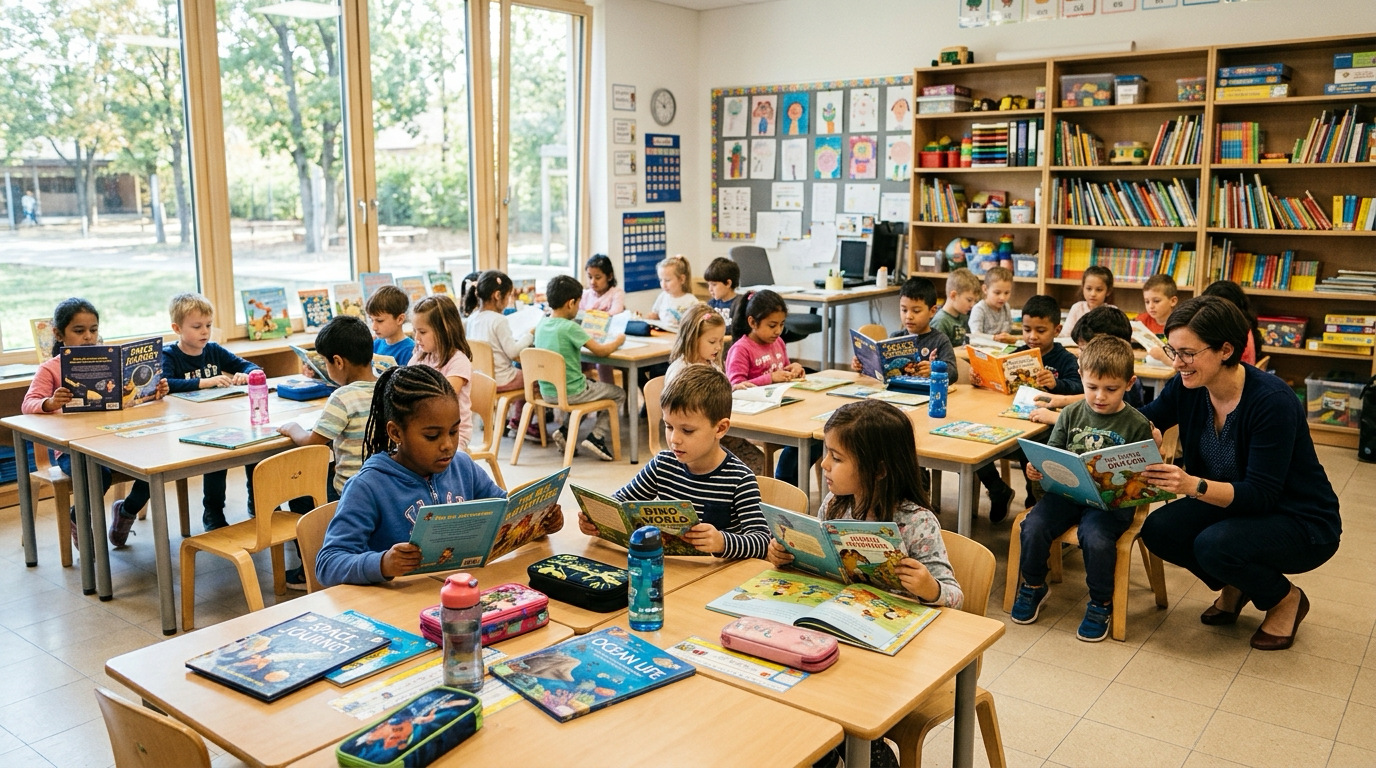
- Literacy coaches in every K–3 school. Each coach will work directly with classroom teachers to model evidence-based reading strategies and analyze student screening data.
- Mandatory kindergarten before first grade. Children must now attend a full year of kindergarten — public, private, or home-school equivalent — before enrolling in first grade.
- First-grade readiness assessments. Schools must administer a standardized readiness check to every rising first-grader to identify students who need early intervention.
- Unified local literacy plans. Each school system must submit a system-wide literacy improvement plan aligned with the science of reading.
- Instructional-materials standards. The state Board of Education will certify and fund high-quality reading curricula that meet evidence-based criteria.
The act also establishes a Georgia Literacy Coordinating Committee and a separate Literacy Task Force to oversee implementation and report progress to the General Assembly annually.
Building on 2023 reforms
Georgia’s push to overhaul reading instruction began with two companion bills passed in 2023. HB 538 required K–3 instruction based on the science of reading and mandated universal screening three times per year. SB 211 created the Georgia Council on Literacy to guide the transition.
Supporters say the 2026 act closes the gap between policy and practice by putting a trained adult in every building to help teachers apply what the research says works.
“Legislation doesn’t teach children to read — people do. This law puts the right people in the right buildings.”
— State education official
Scope of the challenge
Georgia’s most recent reading proficiency data showed that only about 43 percent of third-graders scored at or above grade level on the state’s Milestones assessment. In some high-poverty districts, that figure dropped below 30 percent.
Literacy researchers say that third grade marks a critical inflection point: students who are not reading proficiently by the end of third grade are four times more likely to drop out of high school.
What teachers are saying
Educator groups largely praised the bill but cautioned that coaching works only if coaches are protected from being pulled into administrative duties, testing logistics, or substitute teaching.
The Georgia Association of Educators asked school districts to commit in writing that literacy coaches will spend at least 80 percent of their time working directly with teachers and students.
Timeline
School districts have until the start of the 2026–2027 school year — which begins as early as August 3 in many Georgia systems — to hire and deploy their coaches. The state Department of Education will release implementation guidance by June 15.
Aisha Bell covers education and community affairs for WACN 21. Reach her at abell@wacn21.com.